Is Despair Really Kufr?
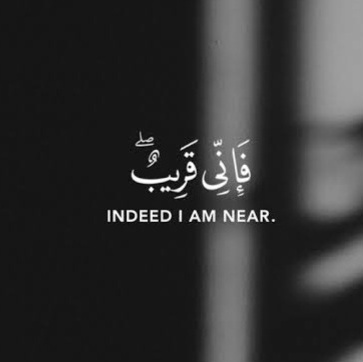

It is one of those sentences many of us have heard since childhood. We have heard it so often that we never stopped to ask what it actually means. Yet when we take it seriously, questions begin to stand before us.
Is Despair Really Kufr?
“Despair is kufr (disbelief).”
It is one of those sentences many of us have heard since childhood. We have heard it so often that we never stopped to ask what it actually means. Yet when we take it seriously, questions begin to stand before us.
If despair is truly disbelief, what of those who shatter at some turn in life? Those walking through the loss of someone dear. Those who meet failure after years of effort. Those buried so deeply under the weight of their sins that they begin to think there is no road back. Are all such people guilty in the sight of Allah?
Interestingly, the phrase “despair is kufr” is not found in the Qurʾān. What the Qurʾān does say is that despair of Allah’s mercy is a mark of those who disbelieve.1 And the same Book says: “Say, ‘O My servants who have transgressed against themselves, do not despair of the mercy of Allah. Indeed, Allah forgives all sins. Indeed, it is He who is the Forgiving, the Merciful.’” (39:53)2 This is probably the ground on which the saying found its way into everyday speech.
But when these verses are read in their context, something important comes into view: the Qurʾān does not hide human sorrow. On the contrary, it tells us the stories of prophets who passed through trial, separation and pain.
The story of Prophet Yaʿqūb (peace be upon him) is a striking example. When he lost his son, Prophet Yūsuf (peace be upon him), the Qurʾān tells us, he turned away and said, “Oh, my sorrow over Yūsuf,” and his eyes became white with grief.3 This is not the story of a man untouched by pain. It is the story of a father who felt the separation from his beloved son with his whole being, and felt it so deeply that his sight was lost.4
And how does he grieve? “I only complain of my suffering and my grief to Allah,” he says, “and I know from Allah that which you do not know.”5 Even in the depth of his tears, his face is turned toward his Lord. Later, he tells his sons: “Go and find out about Yūsuf and his brother, and do not despair of relief from Allah. Indeed, no one despairs of relief from Allah except the disbelieving people.”6
Here a clear distinction appears: grief and despair are not two names for one thing.
Grief is an emotional state. A person may weep, may grow weak, may be heartbroken. All of this is part of being human. Despair goes a step further. It begins when a person, on the strength of his pain, passes a verdict on the whole of reality; when emotion overpowers reason and takes the seat of judgment.
A simple example shows the difference. One person says, “I do not feel any hope.” Another says, “There is no hope at all.” The first sentence describes a state of the heart. The second makes a claim about reality, and it is this claim that the Qurʾān refuses.
With our limited understanding we look at one turn of life and then build a final judgment upon it. One failure makes us feel we will always fail. One sin convinces us that forgiveness is no longer possible. One closed door persuades us that every door has been shut.
But do we really know that much? Do we know even what is hidden from us? Yaʿqūb’s own words are a quiet answer: “I know from Allah that which you do not know.”
Psychology offers an interesting observation here. Psychologists use the term “learned helplessness” for the state in which a person, after repeated failure or powerlessness, comes to believe that his efforts are of no use. Over time, he stops seeing new possibilities altogether.7 In the same way, the concept of “cognitive distortions” tells us that people sometimes draw enormous conclusions from very limited experience. A single event becomes the summary of a whole life, and one difficult chapter becomes the verdict on the entire future.8
It would not be right to say that the Qurʾān and psychology are saying the same thing. But an interesting resemblance is there. Each, in its own way, draws attention to the limits of human vision. Psychology tries to explain how hopelessness arises and what its causes are. The Word of Allah makes us ask a different question: is hopelessness even true to reality? That is the difference that makes this subject far deeper than a mere religious exhortation.
We often think of hope as a mood: when circumstances are good, hope remains; when they turn bad, hope dies. But the Qurʾān does not rest hope on circumstances. It ties hope to the mercy of Allah, not to our estimates. That is an important difference, because circumstances are limited, while the mercy of Allah is not. Human knowledge is limited, while reality is far wider than anything a person can see in a single moment.
Faith, I believe, does not mean that a person never feels despair. It means that, even in the intensity of grief, he does not claim that hope and success have ceased to exist.
After all this, one thought returns again and again. A human being has the right to feel pain. He has the right to cry. He has the right to be weak. But he does not have the right to conclude, from his own limited understanding, that the doors of Allah’s mercy are closed to him. For it may well be that we are looking at only one page of our life, while the story is not yet complete.
Imam al-Ghazālī describes fear (khawf) and hope (rajāʾ) as two wings by which a believer flies toward Allah.9 Ibn al-Qayyim completes the picture: the heart, on its journey to Allah, is like a bird whose head is love (maḥabbah) and whose two wings are fear and hope.10 If fear overpowers a person, he falls into despair and abandons good deeds. If hope overpowers him, he falls into false security and grows bold in sin. The balance is the heart of a sound spiritual life. As some of the early scholars advised, a person in good health should keep fear dominant so that he may stay away from sin, while in sickness and at the approach of death, hope should prevail so that his trust in Allah’s mercy remains complete.
Endnotes
1. Qurʾān 12:87 (Sūrat Yūsuf). See also 29:23 (Sūrat al-ʿAnkabūt) and 15:56 (Sūrat al-Ḥijr).
2. Qurʾān 39:53 (Sūrat al-Zumar). Translations of Qurʾānic verses in this article follow the Sahih International rendering.
3. Qurʾān 12:84 (Sūrat Yūsuf).
4. Qurʾān 12:96 says he regained his sight (fa-rtadda baṣīran) once Yūsuf’s shirt was cast over his face, which is why most commentators understand 12:84 to describe a loss of sight.
5. Qurʾān 12:86 (Sūrat Yūsuf).
6. Qurʾān 12:87. The Arabic word is rawḥ, which commentators explain as relief, solace and mercy from Allah; translators render it in different ways.
7. Martin E. P. Seligman and Steven F. Maier, “Failure to Escape Traumatic Shock,” Journal of Experimental Psychology 74, no. 1 (1967): 1–9.
8. Aaron T. Beck, Cognitive Therapy and the Emotional Disorders (New York: International Universities Press, 1976); David D. Burns, Feeling Good: The New Mood Therapy (New York: William Morrow, 1980).
9. Abū Ḥāmid al-Ghazālī, Iḥyāʾ ʿUlūm al-Dīn, Kitāb al-Khawf wa’l-Rajāʾ (The Book of Fear and Hope).
10. Ibn Qayyim al-Jawziyya, Madārij al-Sālikīn, in his discussion of love, fear and hope, where he also relates the view of some of the early scholars on giving precedence to fear in health and to hope near death.
About the Author
Khadija Tayyab is a research-based writer from Islamabad, Pakistan. She writes on Islamic thought, human behaviour and personal growth.
#HumanBehavior
Comments (0)